Category: Community involvement

Community Action Ghana’s Amazing Projects get a photographic makeover

Professional Photographers Document Community Action Ghana’s Projects

A Chance Meeting Sparks a Powerful Collaboration

This September, Adrian and Iraj on a visit to ongoing projects in Ghana were joined by professional photographers to highlight the impact of Community Action Ghana. The collaboration began by chance, during a cycling trip through the Oxfordshire Cotswolds, where they met renowned photographer Anthony Dawton.
Anthony immediately noticed that our website images could better reflect the scale of our work. Determined to help, he secured funding to cover travel for himself and fellow photographer Jim McFarlane—and secured a £6,000 donation towards a vital clean water project in Anfo Bume, located in Ghana’s Volta Region.

Photography with Purpose: Bringing Ghana’s Communities to Life

Jim, Anthony, Clemence and Iraj in Black Star Square

Before heading north, the team explored parts of Accra, including a visit to the historic Black Star Square, where Ghana declared independence in 1957. These moments provided the first chance to capture Ghana’s vibrant culture and history through the lens.

With Christian driving our minibus—loaded with a powerful water pump, piping, fittings, window glass, paints, and luggage—we travelled to Anfo Bume. Upon arrival, we checked into the newly opened 7 Stars Hotel, named after the Pleiades constellation.

Life Before Clean Water: Salty Wells and Long Walks

That evening, as the golden hour set in, we walked towards the site where a new borehole was due to be drilled. The journey, only 1.5 km, took an hour and a half, as it coincided with women and children collecting water for evening use.

Their only supply came from a series of hand pumps tapping into a shallow aquifer—an unreliable and salty water source. A single sip confirmed it was unsuitable for drinking. This daily challenge highlighted why Community Action Ghana’s clean water projects are so urgently needed.

Anthony (squatting) and Jim (standing) hard at work.

Adrian and Iraj had been asked not to take snaps as Anthony and Jim worked but we couldn’t avoid taking a few of them at work. We took them discretely and from a distance. Watching them was an inspiring lesson. Their skill at engaging people, organising scenes naturally, and capturing authentic expressions showed the true power of professional photography.

Seeing the community’s warmth and positivity reflected in their images made one thing clear. Strong visuals are essential for sharing Community Action Ghana’s story and inspiring continued support for our mission.

Why Professional Photography Matters for Community Action Ghana

Our work in Ghana is deeply human, rooted in people’s daily lives, struggles, and successes. Photography helps us bring these stories to the world—connecting supporters directly with the communities they help.

This collaboration will deliver professional-quality images for our website but also strengthen awareness of our mission: to provide sustainable clean water solutions in Ghana and support community-led development across the Volta Region and beyond.

Watch the transformation of our website over the next few weeks as it is altered by the wonderful work of Anthony and Jim.

Blog to be continued …………………………………..

Loading

Wonderful Hub & Library is ready for all to use.

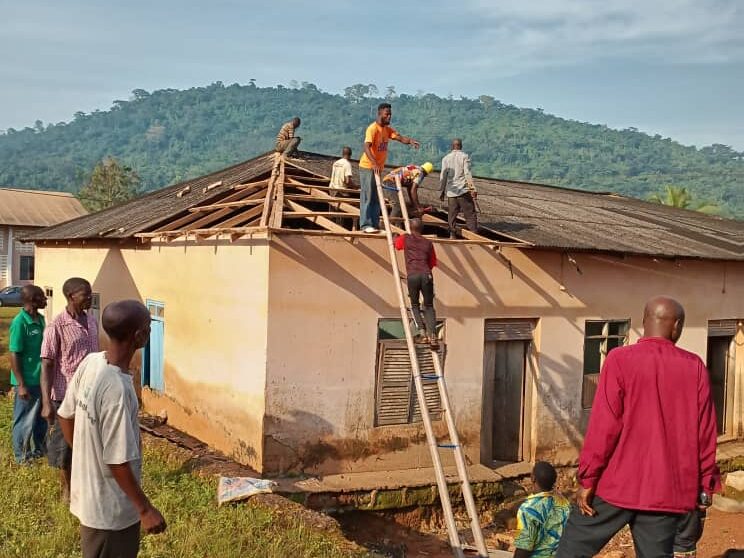
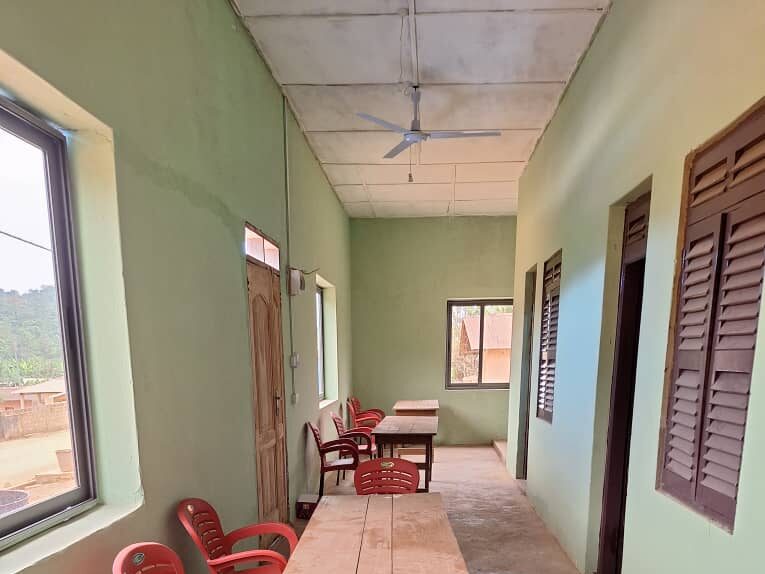
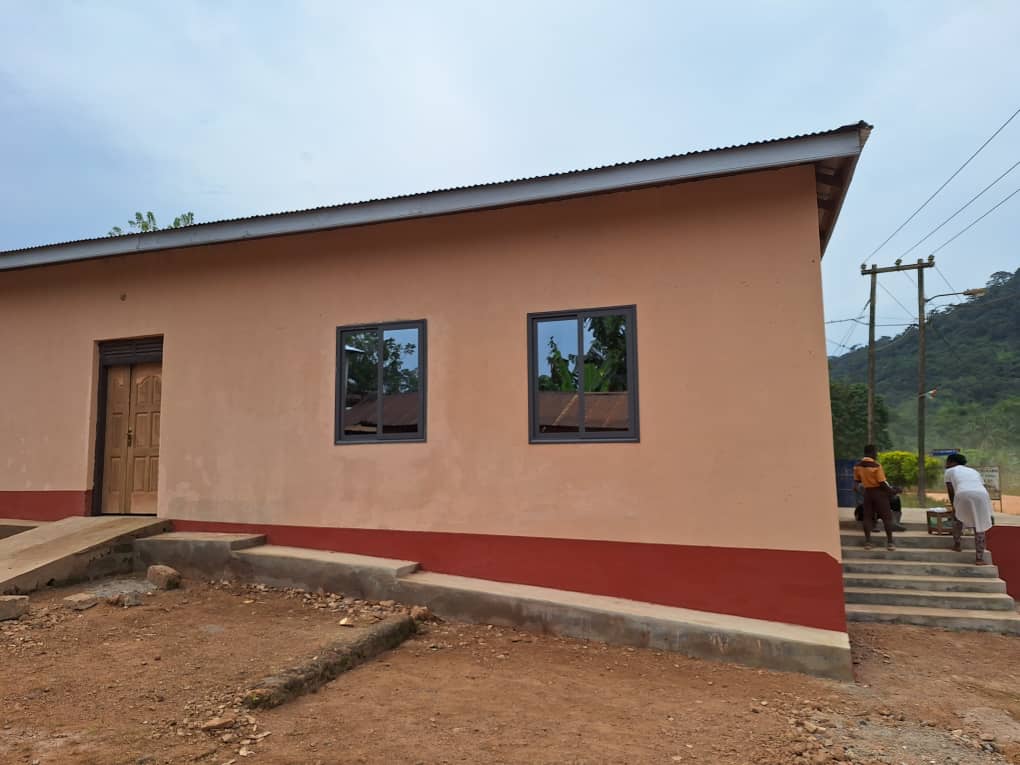
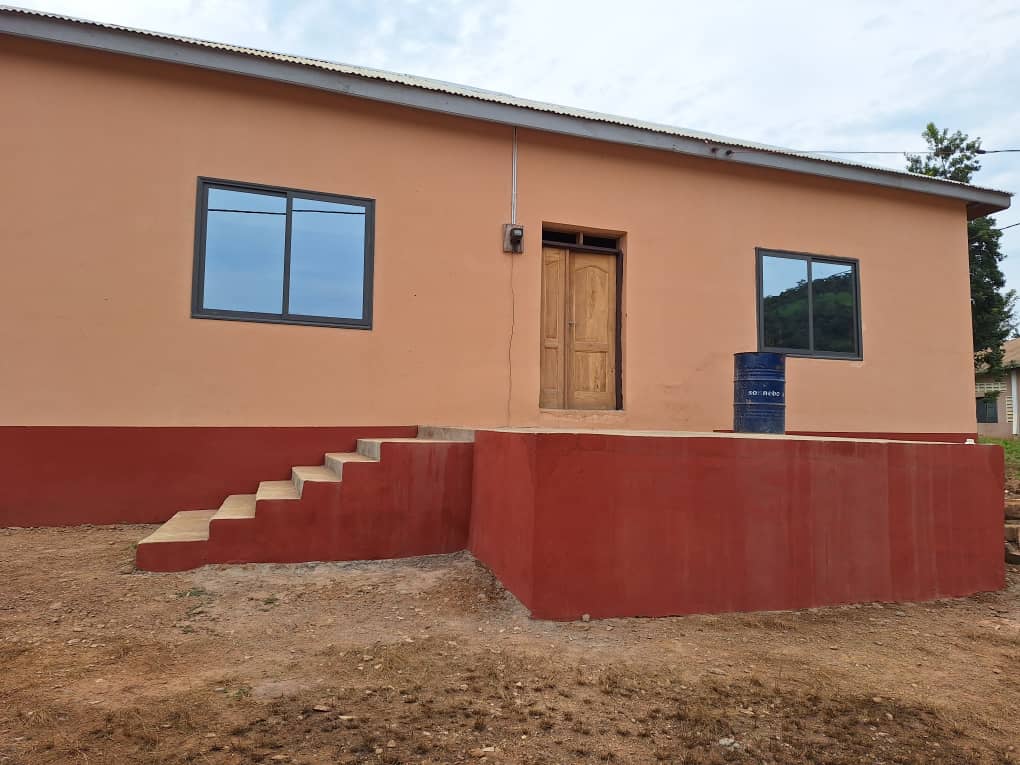
After a year of hard work the community of Lolobi have completly renovated the old cocoa buying offices and turned them into a glistening new building they can all use as a library and computer centre.

First a new roof was needed to make it weather proof

Before
After

Then the interior needed a lot of Tender Loving Care

And got it

Before
After

The outside was rendered and painted

Not a bad year’s work

And finally the shelves were stacked full of Books

This has only been achievable with the donations from many people especially those who have set up regular standing orders, thank you. Thanks must also go to Book Aid International as what would a library be without books. Thank you all.

Loading

Wonderful Marathon Runners raise funds for Community projects. Thank you!

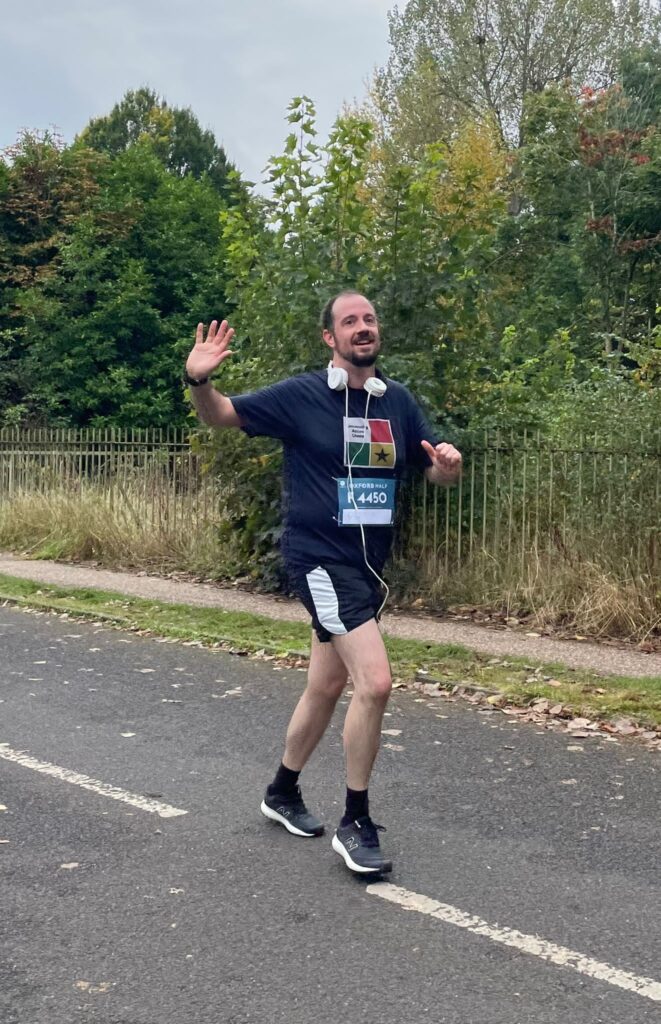
David and Kate at the start
And again at the end of 13.1 gruelling miles

Just how do you thank these wonderful people for training and then running the Oxford Half Marathon. The distance 13.1 miles, thats just over 21 km in 2 hours 15 minutes and 2 hours 22 minutes. Akpe kakaka (Ewe language for thank you totally)

At 6 miles (10 Km)

Kate at 8 miles (13Km)
Still smiling

David at 8 miles (13Km)
Still happy

They have raised over £800 and when you add on the gift aid this will be about £1,000.
Phenomenal.
This amount can go a long way towards helping communities build a toilet block, renovate a library or even go towards putting in a borehole to provide clean drinking water.
For example the money raised could go a long way to building the superstructure on the toilet and roof it.
How worthwhile is that.

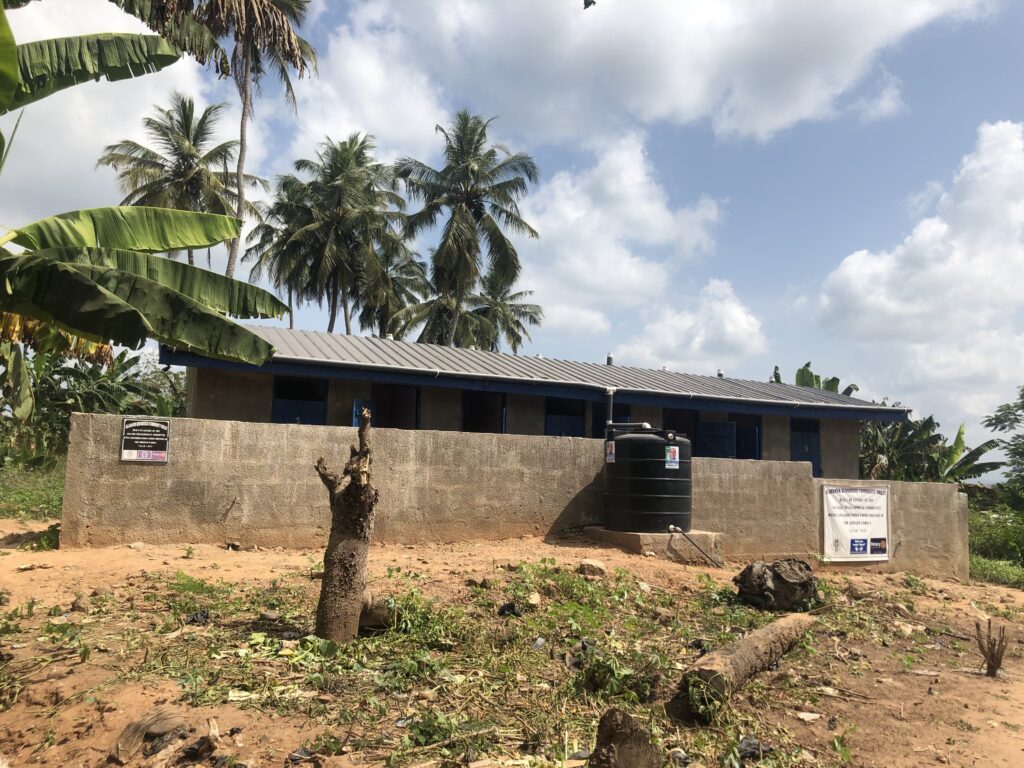
The funds raised could convert this
to this…
Foli John and Michael Deh who are working on the Alavanyo Agome Toilet say Akpe bor oo (A very big thankyou)

If you’ve been inspired by David & Kate’s fundraising and would like to run the Oxford Half Marathon 2022 or any other fundraising initiative please get in touch

Loading

Agome toilet block is started

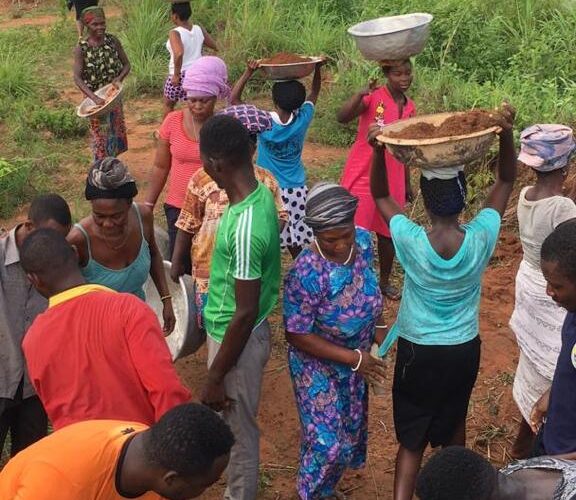
The community of Agome have started building their toilet block. With all of our projects we work in partnership with the community. As you can see this is a whole community effort. Thanks to all of the people who have enabled this to happen, through their donations or labour. We’ll be posting more updates soon…

Discussion of the way forward
Clearing the site
Collecting sand
Carrying sand to the site
Sand ready to be made into building blocks

Loading

Meeting the Women of Alavanyo

Sun 8th December 2019

We spent the morning with the women of Alavanyo. Around 55 women gathered together. Alyrene asked questions to the women, which were translated by Mary, a ‘Queen Mother’ The Queen Mothers are the wise women of the village who, like the Elders (who are all men) look after the welfare of the community.

Meeting the women of Alavanyo Dzogbedze

Toilets
When asked if any of them used the toilets constructed earlier in the year they all said yes. With an average of almost four children per household this indicates that at least 326 people are benefiting from the toilets every day.

“I go every day. Very good. The place [the toilet] is good, nothing bad. I am very very happy”

As well as the obvious health benefits of the toilets, Mary explained that she, and others in the village, now feel proud to invite friends and relatives to their homes. Without a toilet they felt “a disgrace” when people came to visit as they could only offer the bushes for them to relieve themselves. Hospitality is integral to Ghanaian society so the toilets bring heath, dignity and hospitality – all so very important.

Learning a Trade
Keen to find out more about the women we asked more, each question was translated by Mary and the women took it in turn to discuss their answers. Almost unanimously they said they wanted to learn a trade to make money. None were looking for handouts, rather support to earn their own funds. A lot of their husbands work in Accra, Ghana’s capital city which is around a five hour drive away. The women stay in the village to tend to the farm and look after the children. Some, like Mary, already run their own business. Mary has been a hairdresser for 15 years and is trying to earn enough money to finish the construction on her house. Currently she rents a small house for herself and her five children. She was looking forward to seeing her husband for Christmas, the first time in three months.

Mary at her unfinished house


When asked what made them feel unsafe, Gloria also spoke of needing a trade, “poverty, because we don’t have a trade, we have no money”.
Other women, such as 20 year old Beatrice said she wanted to become a business women. Trades they were interested in varied from making soap and beads to batick (Ghanaian tie-dye cloth) or baking. In order to set up these businesses they would need small loans, training and the use of equipment.

Water
With no mains connection and a faulty borehole in the village the main source of water comes from three small streams and capturing rain water. In December we were at the beginning of the dry season with little to no rain and the water in the streams was already running low. The women spend much of their time “searching for good water”. They explained that by January they would queue for three to four hours at the one remaining stream for one bucket of water. This water is used to wash themselves and their families, to cook with, wash the dishes and clothes and keep the home clean.

Collecting water

Luckily affordable drinking water is available, sold in 500ml plastic bags for the equivalent of a few pence. These bags are sold across the country delivered on big lorries. The plastic waste and littering can’t be ignored but the health benefits since these bags of water have been introduced are immense.

Loading